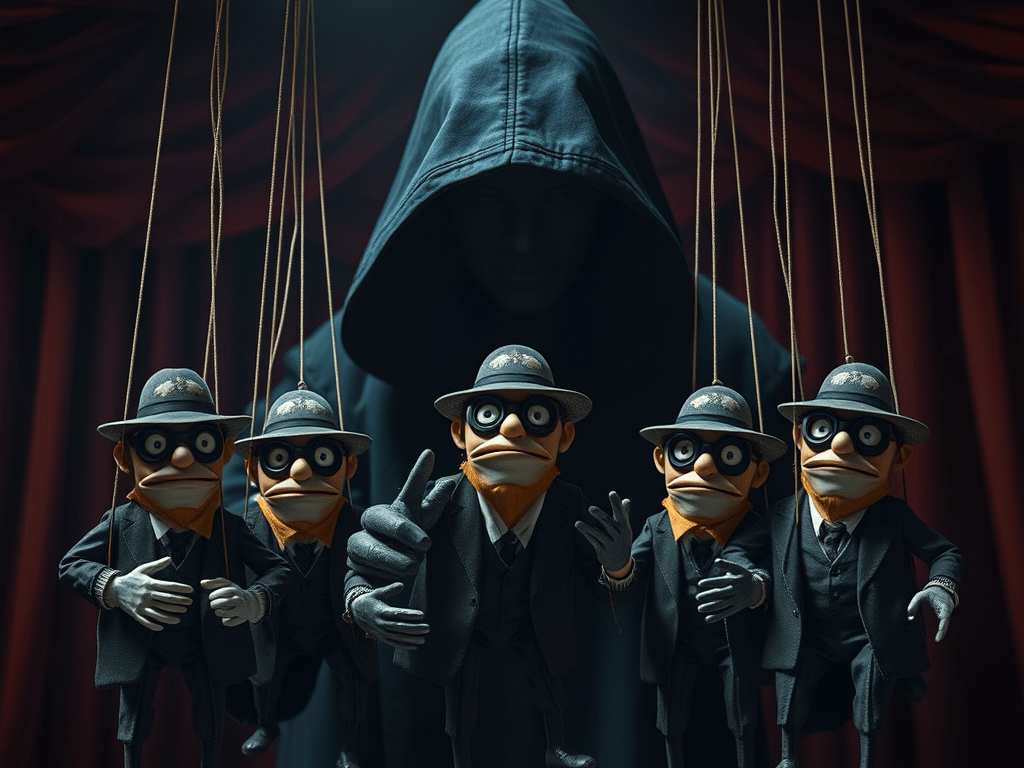
Let’s talk about espionage, folks—because it’s not just James Bond anymore. We’re in a whole new freak show of dirty tricks and shady dealings, a global whack-a-mole game where the moles are armed, reckless, and decidedly not wearing tuxedos. Governments are hiring proxies like some sort of cut-rate temp agency for sabotage. Think of it as the gig economy for crime: assassins on speed dial, hackers with discount codes, and biker gangs moonlighting as secret agents. It’s not just espionage—it’s espionage gone stupid.
In the past year, the usual suspects—Russia, Iran, China, North Korea—have been caught subcontracting their dirty work to whoever is available. Need a dissident harassed? Call a biker gang. Want a pipeline hacked? Find some basement-dwelling ransomware nerds. The West is shouting from its rooftops: “Hey, these guys aren’t even subtle anymore!” And why would they be? When you’re farming out high-stakes operations to amateurs, subtlety isn’t on the menu.
MI5’s Ken McCallum called this a “staggering rise” in proxy antics. Germany’s intelligence chief added that we’ve reached a “new level” of lunacy. Even Microsoft—yes, the Windows people—are waving the red flag, screaming about cybercrime gangs teaming up with nation-states like some twisted Avengers initiative. When tech nerds and spies are equally alarmed, you know things have gone sideways.
Why Use Proxies? The Dirty, Discount Logic
Here’s the deal: espionage is messy, and sometimes you don’t want your fingerprints all over the grenade pin. That’s where proxies come in—local hitmen, gangs, hackers, and other lovable degenerates who’ll “take care of it” for a fraction of the cost. No training? No problem! These guys don’t know “plausible deniability” from a ham sandwich, but they’re cheap, they’re local, and they don’t ask questions. What’s not to love?
But here’s the catch: it’s outsourcing gone wrong. Imagine your worst Uber Eats experience, but instead of a cold burger, it’s a botched assassination or a drone crashing into a commercial airport. Proxies are messy, unpredictable, and as reckless as a raccoon on meth. Want proof? Look no further than the French hotel room explosion in June—caused by a pro-Russian saboteur who probably learned his bomb-making skills on TikTok.
The Cyber Clowns Enter the Chat
And then there’s the digital side of this circus. Cybercrime gangs, like Russia’s Evil Corp, are being handed the espionage equivalent of a loaded gun and told to “go nuts.” These are people who once apologized for accidentally causing a fuel shortage in the U.S. because their ransomware attack was too successful. Yes, they apologized. Welcome to the era of hackers with buyer’s remorse.
The real kicker? This is how governments now prefer to operate. Because why train your own people when you can hand the job to a group of amateurs who don’t know the difference between disabling an IT system and shutting down half the country’s energy grid?
Outsourcing: The Risks Nobody Mentions
Let’s get one thing straight: hiring proxies isn’t just lazy—it’s dangerous. For everyone. You, me, and the poor sucker trying to buy shoes in a mall that gets torched because some wannabe saboteur didn’t read the fine print. Plausible deniability only works if your proxies aren’t complete morons, but these folks are more likely to film their crimes for TikTok than follow precise instructions.
When governments subcontract their espionage, they lose control. That’s the rub. It’s like trying to organize a flash mob with no rehearsal—you’re rolling the dice on whether it’s a choreographed masterpiece or a full-blown riot.
But hey, it’s not just the saboteurs who lose. These bungled operations make everyone nervous. The next time you see a drone at an airport or hear about a “cyber incident,” remember: it could be a botched job by some teenager in his basement who got roped into geopolitics because he clicked on the wrong pop-up ad.
The Future of Espionage: Permanent Outsourcing?
So, is this the new normal? Are we doomed to live in a world where assassinations are carried out by biker gangs and cyberattacks are subcontracted to freelancers? Probably. Western counterintelligence is making it harder for traditional spies to operate, and rival states are turning to proxies like it’s a clearance sale on incompetence.
But here’s the kicker: this proxy madness isn’t just a bug in the system—it’s the system itself. Governments will always find someone to do their dirty work, whether it’s a disaffected hacker, a mercenary, or your friendly neighborhood biker gang. The saboteur’s dilemma isn’t “to proxy or not to proxy.” It’s whether they can keep the chaos contained. Spoiler alert: they can’t.
So buckle up, folks. The circus is in town, and it’s not leaving anytime soon. In the meantime, keep an eye out for the drones, the ransomware, and the exploding hotel rooms. Because espionage is no longer the sleek, shadowy game it used to be. It’s loud, messy, and outsourced to the lowest bidder. Welcome to the spy game’s gig economy, and in the words of Effie Trinket, “May the odds be ever in your favor!”
 TheSignal.Report
Leave a comment